

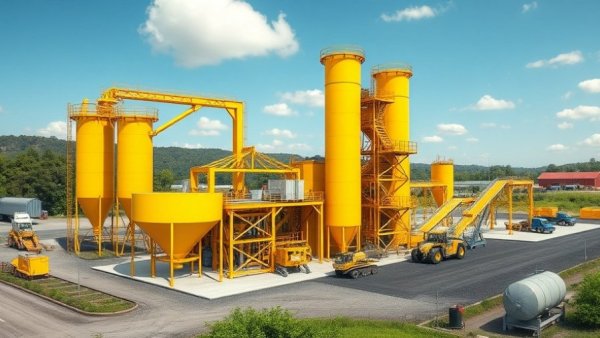
The Rise of RAP Technology in Sustainable Asphalt Production
In today's evolving landscape of sustainability and resource efficiency, Reclaimed Asphalt Pavement (RAP) is emerging as a cornerstone of modern road construction. While governments and contractors are make concerted efforts to pivot towards circular economy principles, the integration of RAP technology is shifting from a supplementary measure to a critical component of infrastructure planning. This transition is not just a matter of adopting a new material; it fundamentally alters how asphalt is produced and utilized, with significant environmental and economic implications.
Embracing Technological Advancements for Quality Control
To leverage the full potential of RAP, the industry must embrace sophisticated technological solutions. Asphalt plants need to be equipped to handle the inherent variability of reclaimed materials, which can affect performance if not properly managed. The quality and performance of RAP mixtures depend heavily on the accuracy of temperature controls and mixing conditions. Advanced recycling systems like hot recycling allow for better integration, safeguarding against premature binder aging, thereby ensuring that the durability and longevity of asphalt are not compromised.
Global Case Studies: Success Stories in RAP Application
A prime example of successful RAP integration can be seen in Anhui Province, China. Here, the deployment of the Lintec CSM4000HRC Asphalt Mixing Plant has demonstrated the feasibility of producing over two million tons of RAP asphalt without sacrificing quality or output. Similarly, Latin American countries like Mexico are ramping up RAP adoption rapidly, fueled by government initiatives aimed at modernizing their infrastructure with environmentally sensitive practices. With plants designed for flexibility, such as the Lintec CDP14000M, achieving up to 15% RAP integration showcases how technology can meet high sustainability expectations effectively.
RAP as a Strategic Asset for Future Construction
As economies face rising material costs and stricter sustainability regulations, the role of RAP in asphalt production is increasingly seen as indispensable. With road authorities embedding recycled content requirements into specifications, project managers and contractors are now under pressure to utilize proven technological solutions that maintain performance consistency while reducing environmental impact. The success of RAP integration rests on treating recycling not merely as an addition, but as a systemic capability critical to long-range planning in road building.
Join the Movement Toward Sustainable Construction
As the conversation around circular economy intensifies, the construction industry stands at a pivotal moment. It’s crucial to advocate for the adoption of RAP technology not just as a compliance measure, but as a vital resource for building resilient infrastructure that meets today’s environmental challenges. By taking action now, stakeholders can ensure that the future of road construction is not just about new technologies, but about a sustainable approach that is as beneficial to our planet as it is to our economies.




Write A Comment